Portal Preflight
Measure file type, byte size, dimensions, page count and supported PDF rules against a verified requirement.
See how preflight works →Choose a verified exam, government, banking or identity portal, check the file against sourced rules before upload, and fix size or format problems in your browser. Generic PDF tools remain available for everyone.
Measure file type, byte size, dimensions, page count and supported PDF rules against a verified requirement.
See how preflight works →Compress PDFs with a text-preserving ladder, fit images into a min/max KB window, or raise a file that is too small.
Fit a PDF →Prepare individually named files, verify them against the portal template, then download a ZIP and optional merged PDF.
Build a pack →DocNimble separates public tool information from the actual workspace. The landing page explains what a tool does, its limitations and how to verify the result. The workspace focuses only on the task and remains excluded from search indexing and advertising.
Combine PDF files in a chosen order without uploading them.
Open the private workspace →Extract selected pages into a new PDF in your browser.
Open the private workspace →Copy selected pages into a clean PDF without uploading the source.
Open the private workspace →Delete selected pages and download the remaining PDF.
Open the private workspace →Enter a new page order and create a reorganised PDF.
Open the private workspace →Rotate all or selected pages by 90, 180 or 270 degrees.
Open the private workspace →Add configurable page numbers to every PDF page.
Open the private workspace →Add a text watermark with opacity, size and rotation controls.
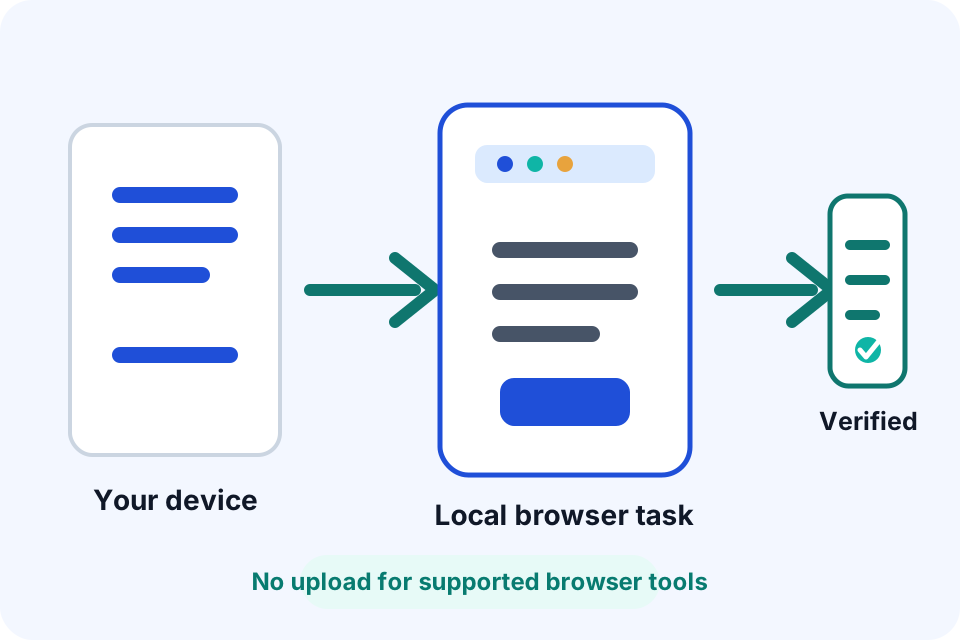
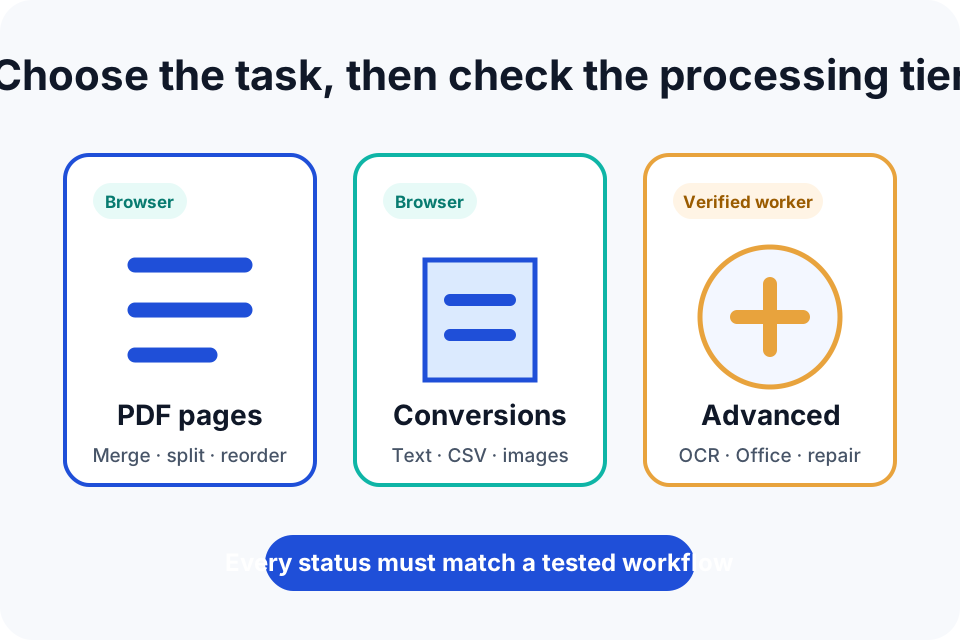
Open the private workspace →Many everyday PDF operations do not need a server upload. Modern browsers can read selected local files, reorganise PDF pages, render images and create new downloads. DocNimble uses that approach for supported browser tools because it removes an unnecessary transfer step and keeps the source under the user’s control.
A browser label does not mean that nothing technical happens. The page loads a task-specific JavaScript library, reads the selected file in browser memory and creates a new result. You should still avoid shared devices for confidential work, close the tab when finished and keep the original outside the browser.
Some operations require software that a normal browser does not provide. Word, Excel and PowerPoint conversion can require an office rendering engine. OCR needs text-recognition software. Advanced PDF repair and compression can depend on specialist binaries. Those workflows use secure server processing. They appear as unavailable, beta or live according to actual service readiness rather than marketing promises.
Before an advanced tool can be called live, it must complete a real input-to-output test. Paid access never changes an unavailable tool into a working one, and the free browser catalogue remains usable when advanced processing is offline.
Start by deciding what result you need. “Make this file smaller” can mean image recompression, removing pages or converting a document to a different format. Choosing the wrong operation can reduce quality or change information that mattered.
This verification habit matters because PDF files can contain more than visible pages. They may include forms, annotations, bookmarks, attachments, metadata, layers or digital signatures. A simple page operation can affect some of those features. The tool page explains the main risks, but the person using the result remains responsible for checking the output.
For a browser-processing tool, DocNimble serves the application code and ordinary web page. The selected source file is handled by the browser workflow rather than submitted as a tool upload. Normal hosting logs can still record page requests, time, IP address and user-agent information. The Privacy Policy explains those distinctions in plain language.
Advanced server-processed tools use a different model. When a user deliberately submits a supported job, the input is stored under a random identifier in a protected location and is made available only through time-limited authenticated access. The result is checked before download and both input and output are subject to automated cleanup.
DocNimble does not claim that every file is compatible. It does not label an unavailable function as successful, create fake reviews, publish unreviewed drafts as expertise or add unsupported structured data merely to satisfy an online checker. Search metadata and schema should describe what a visitor can actually see and use.
Optional analytics starts only after it is enabled and the visitor permits analytics cookies. Tool workspaces, job-status pages and downloads remain free from advertising. Advertising stays inactive until the required consent controls and publication checks are complete.
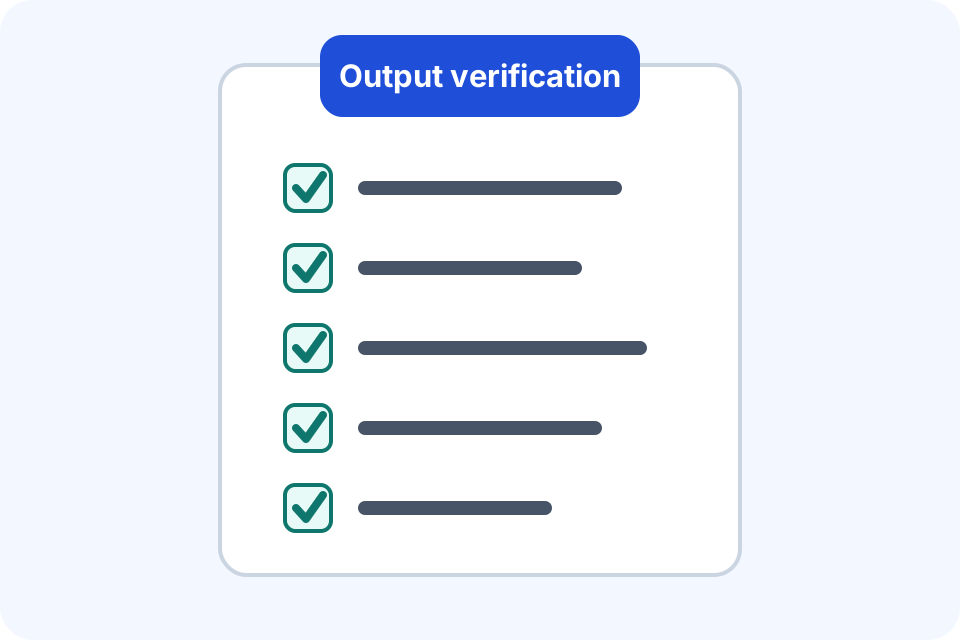
Page count: confirm that no page was omitted, unexpectedly duplicated or added. For a page-range tool, compare the viewer’s page numbers with printed numbers inside the document.
Visual layout: inspect small text, margins, tables, charts, image quality and page orientation. Office conversions are especially sensitive to fonts and print settings.
Searchable text: test selection and search when text access matters. A PDF made from images can look correct but contain no text layer. OCR output can contain recognition errors.
Document features: check links, bookmarks, forms, annotations and signatures when the workflow depends on them. A newly generated PDF can display correctly while those features change.
Destination requirements: compare the output with the receiving portal’s limits for size, format, password protection and page dimensions. Optimise only as much as needed; unnecessary conversion can reduce quality.
These checks are part of DocNimble’s editorial standard and appear throughout tool pages and guides. They help users choose the right operation and understand when a desktop application, specialist recovery service or formal document process is more appropriate.
The installation includes editorial preparation records, but drafts are not public pages. A guide becomes visible only after an editor checks it against the current tool, adds a meaningful image and alternative text, records sources, sets the author and review date, clears the review flag and deliberately publishes it.
Until that work is complete, the public tool pages remain the primary reference for supported inputs, processing behaviour, limitations and verification steps.
This homepage is maintained by the Support IT Editorial Team and reviewed under the DocNimble product-review process. The team documents the current application behaviour, privacy boundaries and verification steps. It does not claim legal, medical, accounting, archival or forensic certification.
Material product changes should update the visible review date, page metadata, structured data and sitemap together. This prevents freshness labels from changing automatically without a real review.